Useful dog-health guidance. No scare stories.

Where to?
Help my dog →

start with their symptoms, not a sales pitch.

When your dog’s not right, start here.

A dog looking straight at the camera

Search a symptom, food, breed or question. You’ll get practical guidance, clear next steps and the vet red flags that matter.

Popular searches

Free, instant, and built to help you find a sensible next step.

there is no need to have it all figured out

Where are you right now?

Pick the line that feels closest. The right kind of help will open here.

Can my dog eat this?

Start with what you need to know.

An accident, an occasional snack and a possible food sensitivity need different answers.

Popular checks

Browse the food A - Z104 checked guides and growing

Keep the common hazards handy

A quick kitchen safety chart covering common foods to share, limit and keep away. One page, free.

We will send the resource and useful follow-up emails. Unsubscribe in one click.

Not sure whether to speak to your vet?

Know the signs that deserve professional advice before changing food again.

Read the vet guide

The proper guides

Where most owners startFood allergies in dogs: the full pictureSymptoms, diagnosis, common triggers, and what to feed instead.
  1. 02The Itchy Dog GuideWhy dogs itch, how to read the clues, what your vet will check first, and the one test that actually answers the food question.
  2. 03How much protein does your dog need?A vet-backed breakdown of amounts, sources and quality.
  3. 04Novel proteins: the real scienceWhat actually counts as novel, and which options hold up to scrutiny.
  4. 05Food allergy or intolerance?They look similar and get treated differently. How to tell them apart.
  5. 06Supplements that actually workOmega-3, probiotics and the rest, ranked by evidence not hype.
  6. 07How to read fibre on a dog food labelWhat the number misses, which fibres do what, and when a higher-fibre food makes sense.
  7. 08Kidney diets for dogsA plain-English guide to the evidence, label numbers and questions to take to your vet.
  8. 09Large-breed puppy feedingA practical guide to portions, body condition, growth rate and choosing the right food.
  9. 10When to switch a puppy to adult foodUse growth, expected adult size and the food label to decide when to consider the change.
  10. 11Healthy weight for dogsA hands-on body-condition check, whole-intake audit and the next feeding step.
  11. 12Does neutering make dogs gain weight?What the studies show, why weight gain is not inevitable and what to monitor before changing the bowl.
  12. 13Feeding an active dogA monitored way to adjust the bowl when workload changes, without a fixed extra portion.
  13. 14Mixing wet and dry dog foodUse both packet guides to make one ongoing daily ration without adding two full portions.
  14. 15How many times a day should you feed a dog?Split one measured daily allowance across a practical routine, with clear puppy and medical-plan boundaries.
  15. 16How to store dog food after openingKeep pack instructions and batch details together, with separate routines for dry and opened wet food.
  16. 17How to measure dog food in gramsUse gram scales, zero the bowl and handle cup-only instructions without guessing a universal conversion.
  17. 18Dog food toppers: do you need one?Decide whether an optional topper has a useful job, then check its nutritional role, calories and fit with the existing plan.
  18. 19Complete vs complementary dog foodUse the UK label's purpose statement to decide whether a food can form the whole daily ration.
  19. 20Are conkers poisonous to dogs?What to do after a conker pickup, including the separate poisoning and blockage risks.
  20. 21Dog pancreatitis: signs and what to doA symptom-first vet-call guide, with diagnosis, fasting and feeding boundaries.
  21. 22Dog hot spots: what to doRecognise a possible hot spot, stop further self-trauma and know why the cause needs a vet check.
  22. 23Dog yeast infection: signs and next stepsNotice possible skin, paw or ear signs, understand what cytology adds and prepare for the vet check.
  23. 24How often should you worm a dog?Build a risk-based plan from age, travel, diet and exposure without copying a universal calendar.
  24. 25Why does my dog eat poo?Separate an established habit from a sudden change, manage access and prepare useful notes for your vet.
  25. 26How much exercise does a dog need?Build a routine around the individual dog without using a universal minutes target or puppy clock formula.
  26. 27How much water should a dog drink?Use a rough drinking reference, food moisture and a short record; a new increase needs a vet.
  27. 28Dog scared of fireworks?A before-dark plan, choices for the event itself and clear signs that need the vet.
  28. 29How many treats can a dog have?A whole-day treat audit that avoids a universal piece count and makes every extra visible.
  29. 30Best dog treats for trainingChoose a practical food reward by the dog, the training job and the existing feeding plan.
  30. 31What to do when your dog will not eatSeparate urgent appetite changes from routine, portion and palatability problems.
  31. 32Cold-pressed dog food, explainedWhat the process means, which claims it cannot prove and how to compare finished foods.
  32. 33Feeding an older dogUse body condition, muscle, activity and diagnosis rather than age alone.
  33. 34Dog bloat and GDVThe symptoms to act on, why there is no safe waiting period and what the vet may do.
  34. 35Dog skin problems and coat changesCheck urgency, record what changed and choose the right next step without guessing the cause.
  35. 36Dog losing fur and bald patchesTell shedding from visible fur loss, record the pattern and know when a vet is needed.
  36. 37Smelly wind in dogsWhen food or eating speed may be involved, what to record and which signs need a vet.
  37. 38Treats for a sensitive stomachWhat is genuinely checkable on a treat pack, and when the answer is a vet instead.
  38. 39Treats without chickenWhich label words hide chicken, and how to check a pack properly in under a minute.
  39. 40Natural dog treats, decodedThe word is not tested or defined. What to compare instead, and why natural is not safe.
  40. 41Grain-free dog treats, decodedWhat the claim confirms, what it cannot prove and five checks for the rest of the pack.

Browse by breed

What breed evidence can tell you

See what it cannot tell you too, then take the next useful check. These labels describe the available evidence, not a high-to-low risk ranking for your dog.

Filter breeds by evidence

20 breed guides in the A to Z

  1. Breed evidence limited

    Bichon Frise

    Also: Bichon

    A sex-specific signal was borderline in one Australian study, and another selected-breed study found no significant over-representation. Neither is a UK prevalence.

    Content v1.0 · evidence reviewed 7 September 2026

  2. Breed evidence limited

    Border Collie

    Also: Collie

    No modern large UK exact-breed comparison was located. A neutral result for a broad sheepdog group cannot prove average risk or protection for Border Collies.

    Content v1.0 · evidence reviewed 7 September 2026

  3. Stronger atopy evidence

    Boxer

    Also: Boxer dog

    Boxers recur among breeds with higher atopy risk. A short coat can make change easier to see, but redness and body site do not name the cause.

    Content v1.0 · evidence reviewed 7 September 2026

  4. Stronger atopy evidence

    Bull Terrier

    Also: English Bull Terrier

    Bull Terriers have a meaningful atopy signal. Lethal acrodermatitis is a separate inherited disease and must not be relabelled as allergy.

    Content v1.0 · evidence reviewed 7 September 2026

  5. Breed evidence limited

    Cockapoo

    Also: Cockerpoo, Cockerdoodle

    Cockapoos can be affected, but we found no suitable population comparison showing unusual breed risk. Parent-breed findings cannot simply be added together.

    Content v1.0 · evidence reviewed 7 September 2026

  6. Breed evidence limited

    Dachshund

    Also: Sausage dog, Doxie

    Available findings do not provide one reliable Dachshund risk estimate and often pool sizes or coats. A small gene study is not a breed-wide answer.

    Content v1.0 · evidence reviewed 7 September 2026

  7. Breed evidence limited

    Dalmatian

    Also: Dal

    One Finnish owner questionnaire recorded a signal, but it was not a Dalmatian-specific clinical prevalence. Coat colour does not establish the cause.

    Content v1.0 · evidence reviewed 7 September 2026

  8. Anatomy may complicate signs

    English Bulldog

    Also: Bulldog, British Bulldog

    Bulldogs have meaningful atopy evidence, while folds can develop separate disease. Both deserve attention without turning either into proof of food allergy.

    Content v1.0 · evidence reviewed 7 September 2026

  9. Anatomy may complicate signs

    English Cocker Spaniel

    Also: Cocker, Cocker Spaniel

    UK records show a nuanced atopy result alongside much more aural discharge. Ear trouble is important, but it does not prove allergy or food involvement.

    Content v1.0 · evidence reviewed 7 September 2026

  10. Anatomy may complicate signs

    French Bulldog

    Also: Frenchie

    UK records show higher odds of several skin and ear disorders. Fold disease is a separate possibility, and breed does not prove food allergy.

    Content v1.0 · evidence reviewed 7 September 2026

  11. Stronger atopy evidence

    German Shepherd

    Also: GSD, Alsatian, German Shepherd Dog

    German Shepherds show repeated atopy signals across locations. Genetic association research adds context, not a diagnostic test for an individual dog.

    Content v1.0 · evidence reviewed 7 September 2026

  12. Stronger atopy evidence

    Golden Retriever

    Also: Golden

    Golden Retrievers recur among higher-risk atopy groups, but environment and geography alter the signal. Breed does not identify the trigger.

    Content v1.0 · evidence reviewed 7 September 2026

  13. Breed evidence limited

    Jack Russell Terrier

    Also: Jack Russell, JRT

    One questionnaire provides a descriptive breed figure, while the adjusted result covered terriers as a whole. That cannot become a Jack Russell clinical rate.

    Content v1.0 · evidence reviewed 7 September 2026

  14. Stronger atopy evidence

    Labrador Retriever

    Also: Labrador, Lab

    Labradors recur among atopy-risk breeds, with environmental associations alongside genetics. Paws and ears still cannot identify an allergen.

    Content v1.0 · evidence reviewed 7 September 2026

  15. Breed evidence limited

    Poodle

    Also: Standard Poodle, Miniature Poodle, Toy Poodle

    Current studies cover different Poodle sizes and populations, so they do not yield one breed risk. Low shedding does not protect a dog from skin disease.

    Content v1.0 · evidence reviewed 7 September 2026

  16. Anatomy may complicate signs

    Pug

    Also: Pug dog

    Pugs have an atopy signal in breed research, while folds and eye-area discomfort need separate checks. Appearance cannot identify an allergen.

    Content v1.0 · evidence reviewed 7 September 2026

  17. Anatomy may complicate signs

    Shar Pei

    Also: Chinese Shar Pei, Shar-Pei

    UK records show substantial skin and ear burdens, while folds and entropion can create separate problems. Shar Pei fever is not food allergy.

    Content v1.0 · evidence reviewed 7 September 2026

  18. Anatomy may complicate signs

    Shih Tzu

    Also: Shih-Tzu

    A Korean study found over-representation among atopy cases, while UK records use broader skin categories. Coat and grooming can hide change, not diagnose it.

    Content v1.0 · evidence reviewed 7 September 2026

  19. Stronger atopy evidence

    Staffordshire Bull Terrier

    Also: Staffy, Stafford

    A UK primary-care study recorded higher adjusted odds of atopic dermatitis in Staffies, while absolute prevalence remained modest. Breed is context, not certainty.

    Content v1.0 · evidence reviewed 7 September 2026

  20. Stronger atopy evidence

    West Highland White Terrier

    Also: Westie, West Highland Terrier

    Westies recur among higher-risk atopy groups across several populations. That does not identify the trigger or make food the default answer.

    Content v1.0 · evidence reviewed 7 September 2026
Just browsing?

One email a week on feeding sensitive dogs - the useful bits, no scare stories. Unsubscribe whenever.

One useful email a week. Unsubscribe in one click.

the food behind the project

One novel protein.
None of the usual suspects.

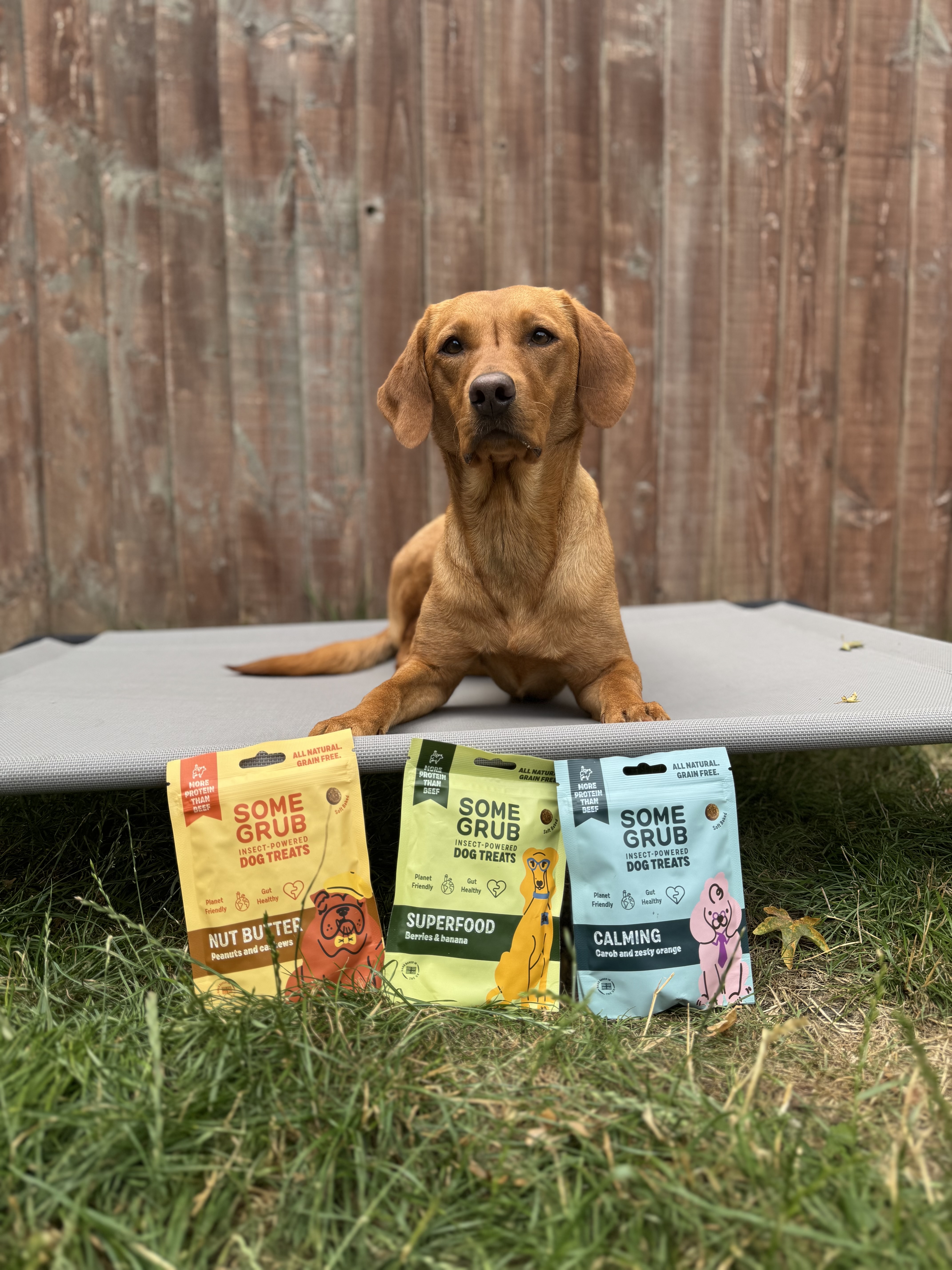
Some Grub is a cold-pressed, hypoallergenic dog food built around insect protein - a protein most dogs have never met, which is the whole point of a food trial.

See the hypoallergenic dog food